A book on why people can’t say what happened
From Cognitive Load to Cognitive Distance
Reframing usability and accessibility in information systems. I wrote it for designers, researchers, product leaders, policymakers and public servants.
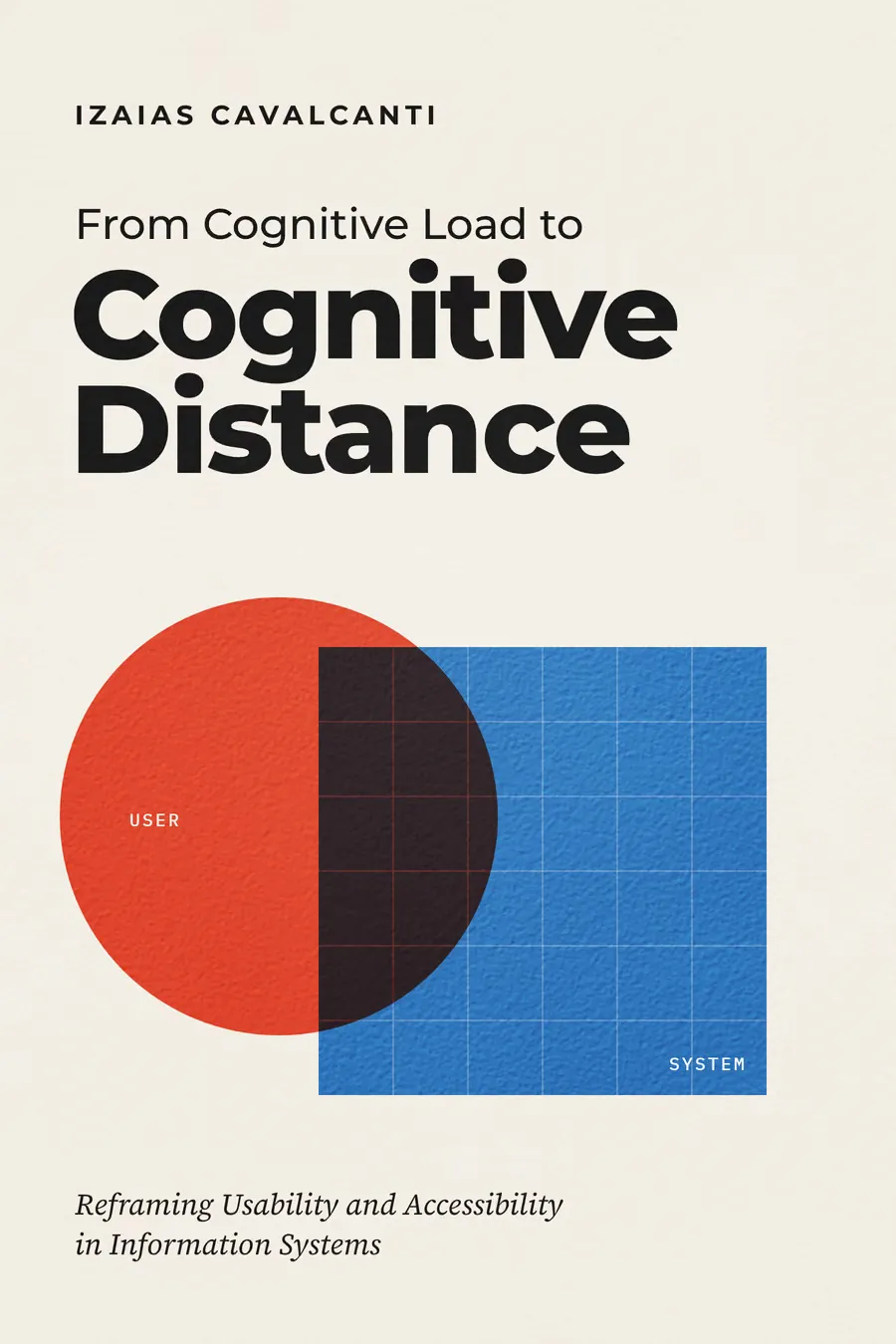
The book argues that usability and accessibility should measure understanding, not only effort. 118 pagesI wrote it and published it myself. It’s free to read online or as a PDF.Read the book, 13 chaptersThe table of contents is online, and so is every chapter behind it.The table of contents, 66 cited worksEvery work the book leans on is listed on its references page, open to anyone.The references. I published it myself, free to read online and as a PDF. Paperback and Kindle are coming.
Chapters
- 01The Distance Problem
- 02How Systems Drift Away From Human Thinking
- 03Mental Models and the Architecture of Understanding
- 04Usability Revisited
- 05Accessibility and the Hidden Dimension of Cognitive Barriers
- 06Measuring the Invisible
- 07Design Assumptions and the Architecture of Misunderstanding
- 08Designing for Alignment
- 09AI and the Expanding Distance
- 10Systems, Institutions, and the Distance Between People and Digital Power
- 11A Practical Framework for Evaluating Cognitive Distance
- 12Toward a New Paradigm in HCI
- 13Closing the Distance
Cite the book
Cavalcanti, I. (2026). From Cognitive Load to Cognitive Distance: Reframing Usability and Accessibility in Information Systems. Retrieved from https://book.izaias.xyz
Cavalcanti, Izaias. From Cognitive Load to Cognitive Distance: Reframing Usability and Accessibility in Information Systems 2026, https://book.izaias.xyz.
Cavalcanti, Izaias. 2026. From Cognitive Load to Cognitive Distance: Reframing Usability and Accessibility in Information Systems. https://book.izaias.xyz.
@book{cavalcanti2026book,
  author = {Cavalcanti, Izaias},
  title  = {From Cognitive Load to Cognitive Distance: Reframing Usability and Accessibility in Information Systems},
  year   = {2026},
  url    = {https://book.izaias.xyz}
}