Products
SigmaMD
The hard part is everything after submit.
In one paragraph
The platform’s superbill already carried almost everything a claim needs, then stopped at a PDF. The real problem was making a payer controlled lifecycle sit beside the clinic’s own invoices, for the same patient, without the front desk feeling the seam.
The distance
The platform already ran membership billing, and its superbill already carried the diagnosis and procedure codes, modifiers and provider details a claim needs. It ended at a PDF. What didn’t exist was everything after submit, when somebody else decides what the clinic gets paid, on their own schedule, in codes.
The person doing this work is a practice admin or front desk staffer for whom billing is one job among several. Not a dedicated biller.
The working
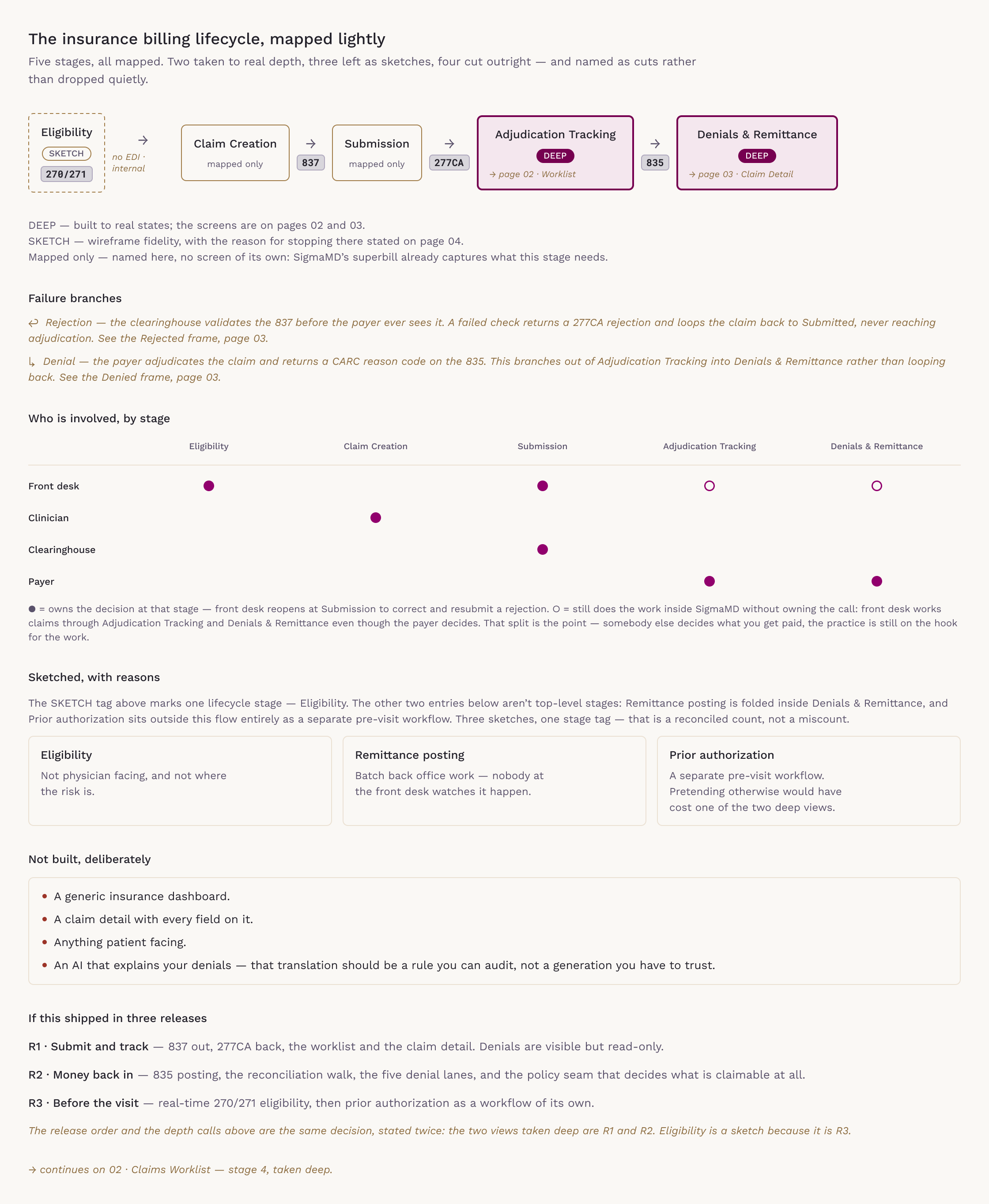
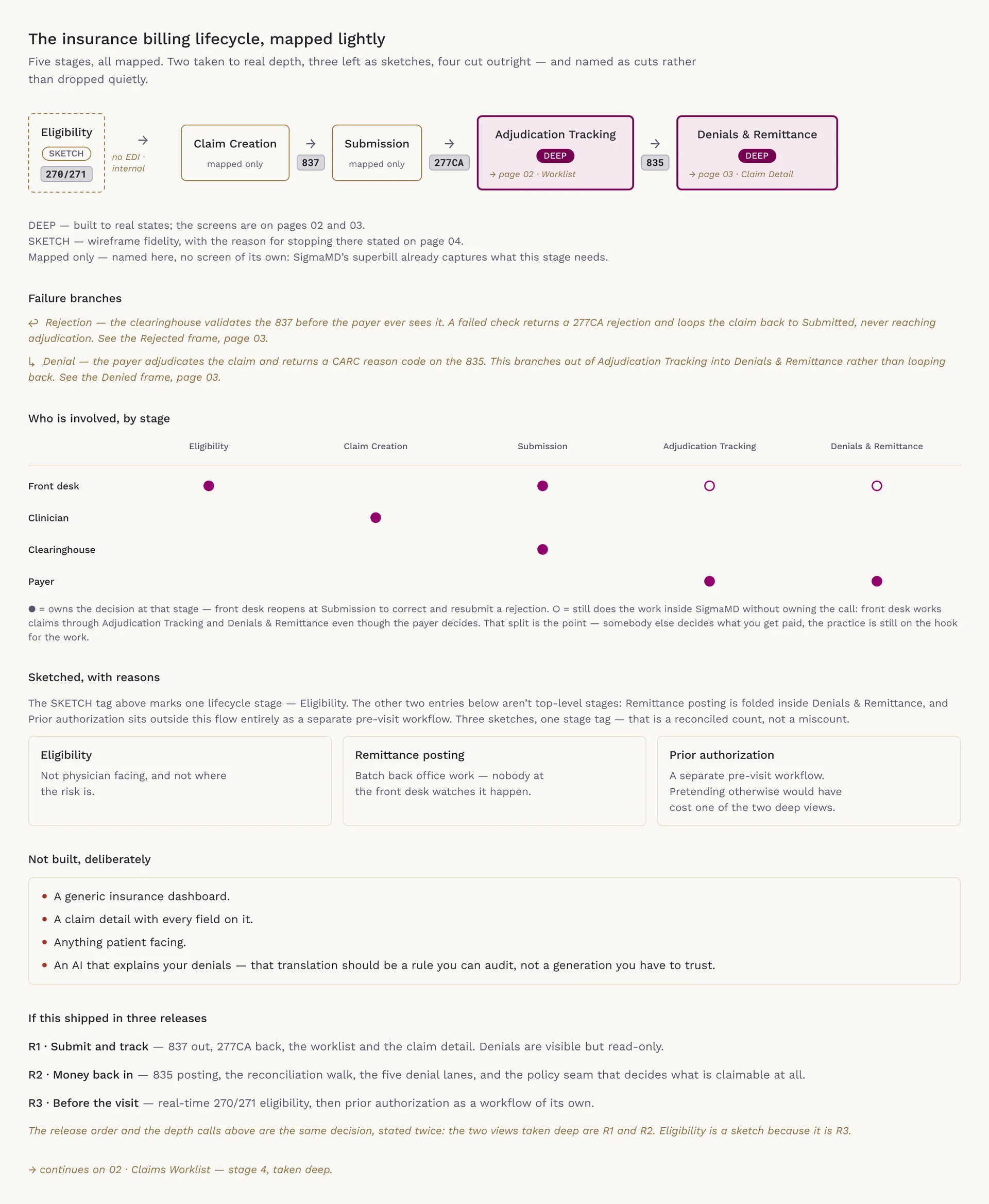
Depth was the scoping call: five stages mapped, two views taken deep, three sketches, and four things cut and named as cuts.Receipt5 stages, 2 views, 3 sketches, 4 cutsScope of the SigmaMD conceptMethodCounted from the scope call on the cover of the concept file.SourceSigmaMD insurance billing concept, Figma file (cover page)Checked The cuts were a generic insurance dashboard, a claim detail with every field on it, anything patient facing, and an AI that explains your denials.
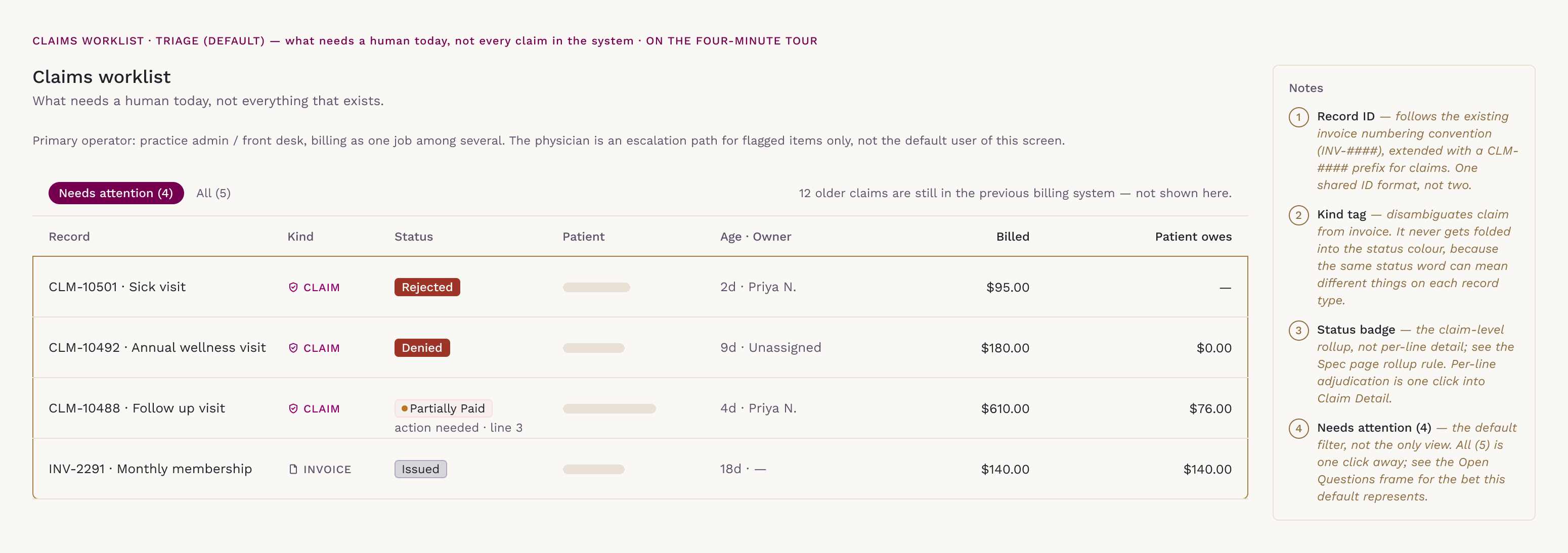
The worklist is a triage queue, not a ledger. By default it shows what needs a human today. Claims and membership invoices share one list, told apart by a kind tag rather than by status colour, because the same status word can mean different things on each.
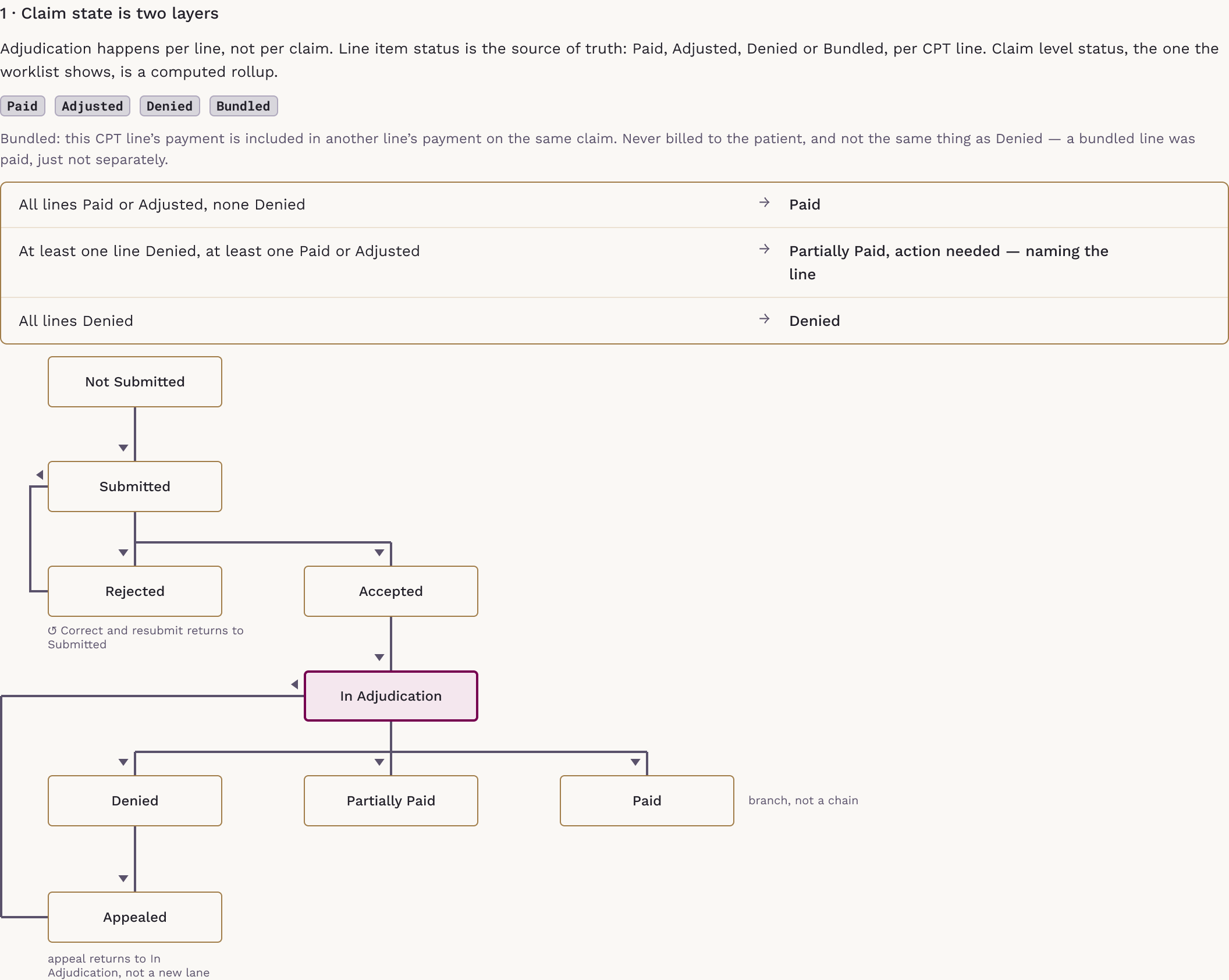
Rejected and denied are different things. A rejection never reached the payer and is usually a quick data fix. A denial is a decision with a reason code that may be worth arguing with. They get different explanations and different next actions.
Show the arithmetic. A partially paid claim walks from billed to allowed, to what the payer paid, to what the patient owes, and checks itself on every line.Receipt$610 billed, $76 owedReconciliation walk exampleMethodThe worked example in the Partially Paid claim detail. Amounts are illustrative, as the file states.SourceSigmaMD insurance billing concept, Figma fileChecked
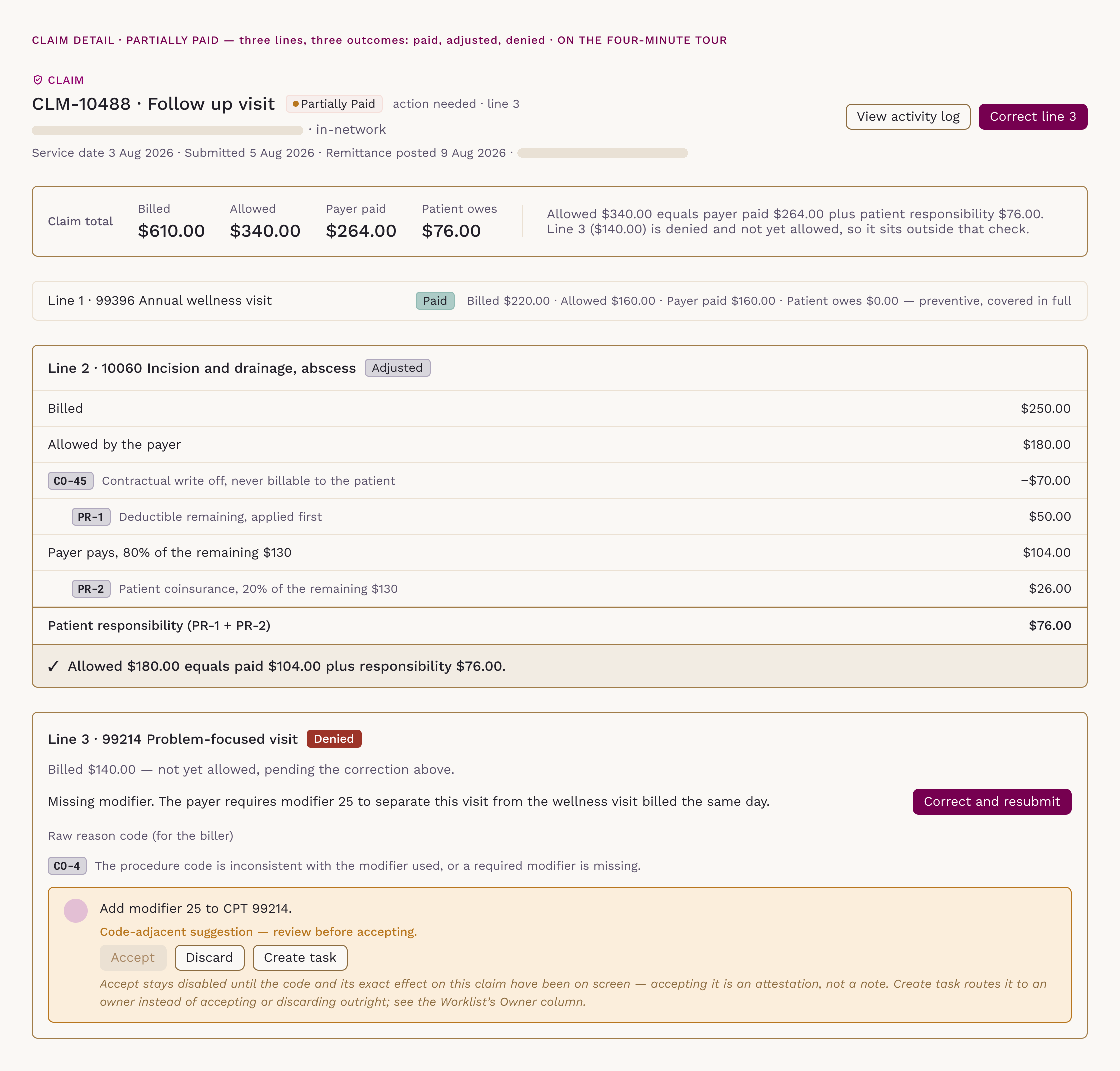
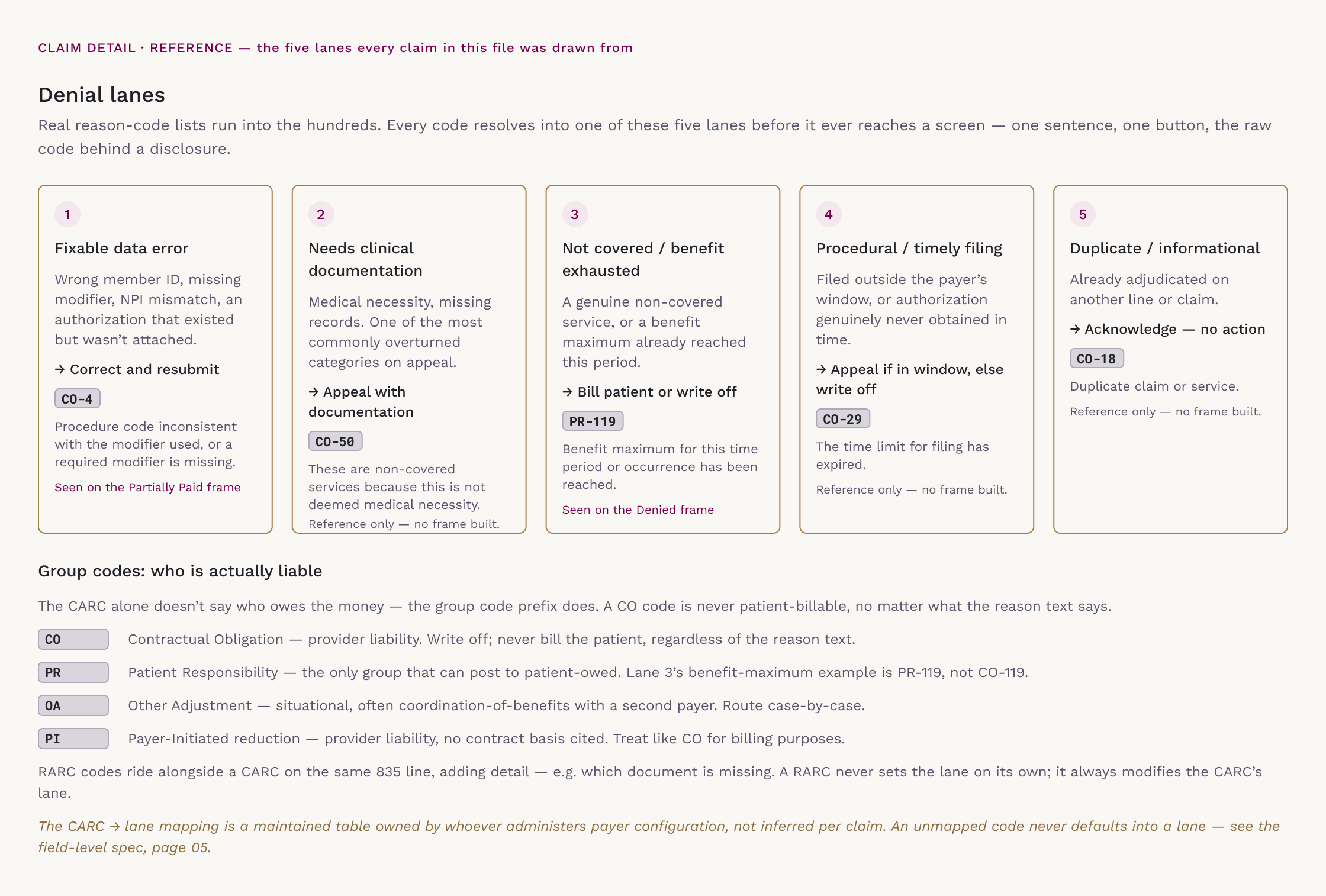
A denial reads as one sentence and one button. Hundreds of reason codes resolve into five lanes, each with one next action. The raw code sits behind a disclosure for the biller, and an unmapped code never falls into a lane by default.
Line status is the truth; claim status is computed. Payers decide per procedure line, so the worklist badge is a rollup with a stated rule, and a partially paid claim names the line that needs action.
The system
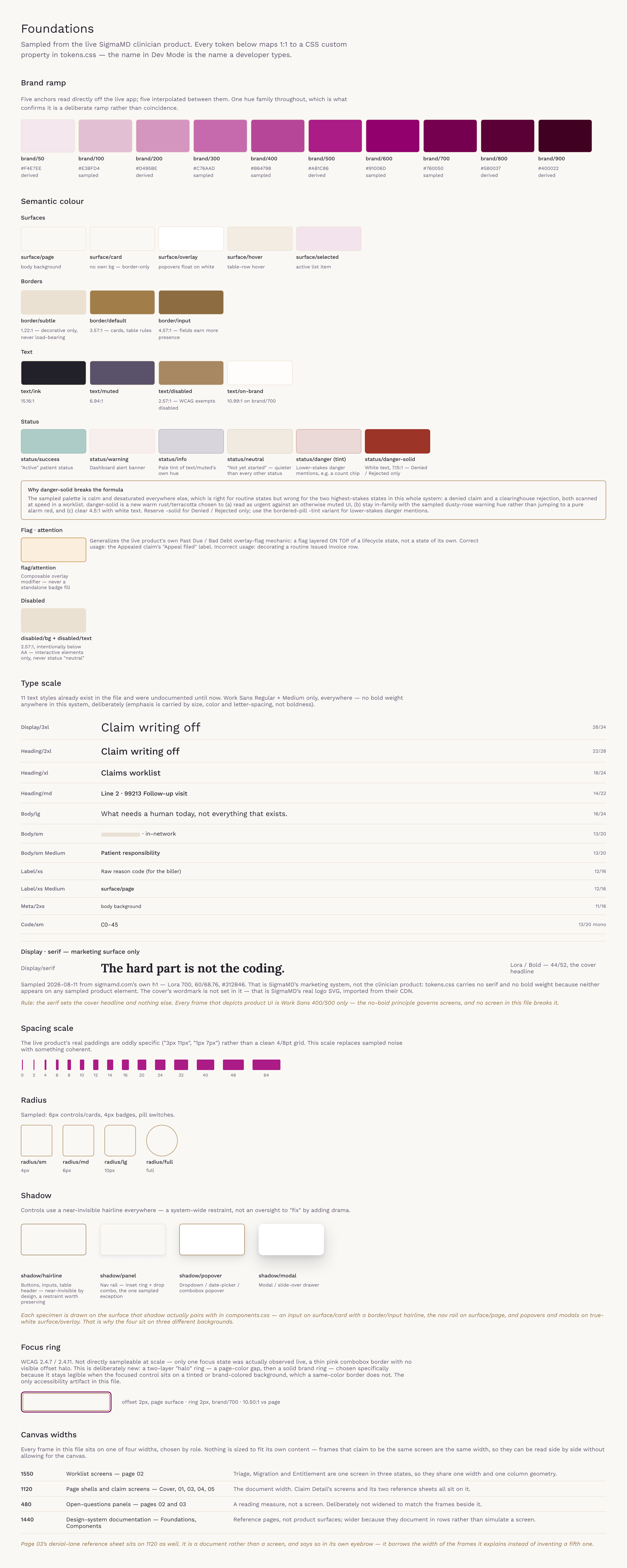
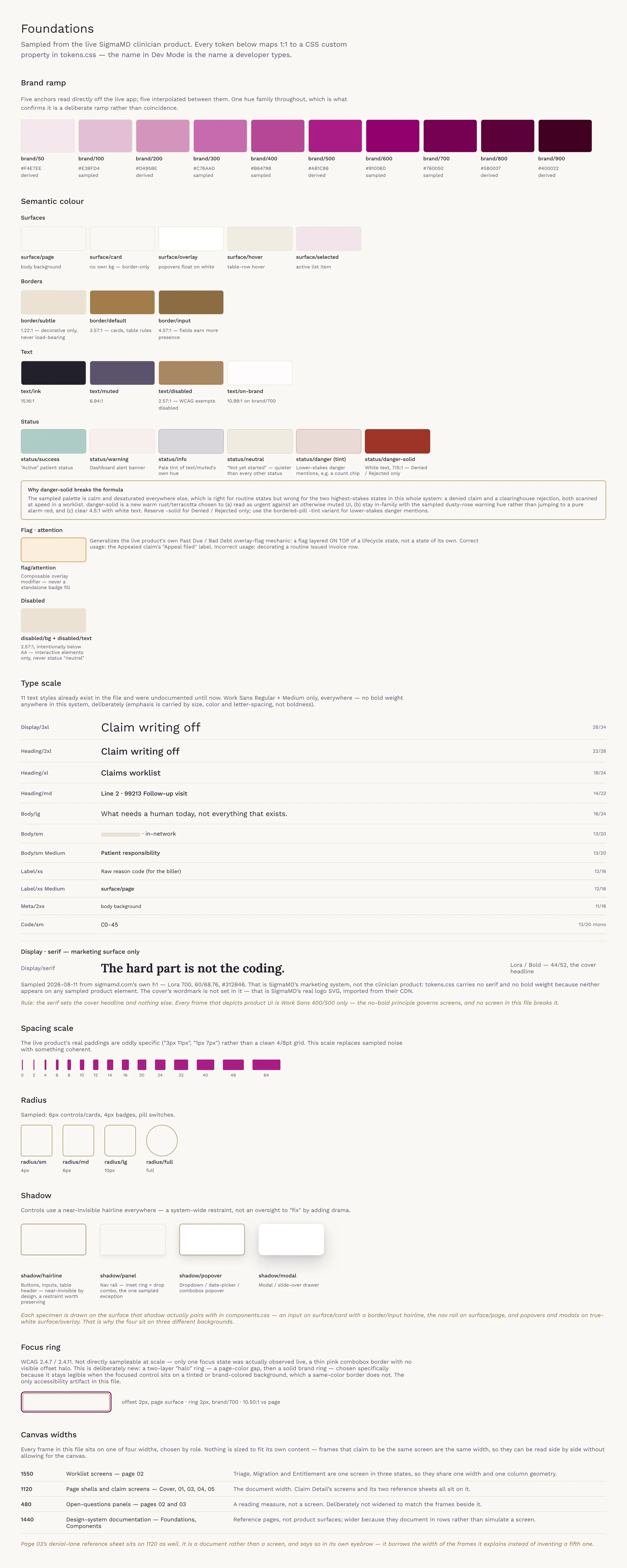
Figma variables that mirror a plain CSS tokens file one to one, so the name in dev mode is the name a developer types.Receipt85 variables, 11 text styles, 4 effect stylesSigmaMD concept design systemMethodCounted in the Figma file’s local variables and styles.SourceSigmaMD concept brief (Ethan, 2026-10-04)Checked Every value was sampled from the live product and marked as sampled, derived or new.
- One sans in two weights, with no bold anywhere. Emphasis comes from size, colour and spacing.
- A magenta brand ramp on warm neutral surfaces. A separate rust is reserved for denied and rejected only, the two states that must be found at a glance.
- An attention flag is an overlay on any state, never a state of its own. A badge tone always means the same record state, everywhere it appears.
What it extends
Claim numbers follow the existing invoice numbering, a written off denial reuses the existing bad debt flag, and correction history reuses the product’s read only activity log rather than adding a second timeline. Open questions sit beside each page instead of being guessed at.
Patients, amounts and payers in the file are illustrative.